"I messed up!": supporting a child's frustration in the kitchen
7 October 2026 · Nephtalie Joseph
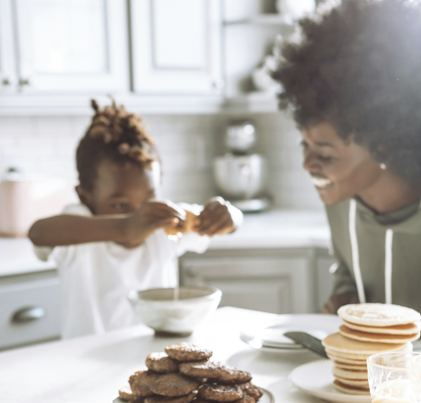
The batter is too thick, the egg slipped into the bowl shell and all, the cake collapsed. Your child freezes, eyes shining: "I ruined it!" This is a delicate moment, and it is also one of the most precious parts of cooking as a family.
1. Start by naming the emotion
Before jumping to a solution, put it into words: "You are disappointed, you really wanted it to turn out well." A child who feels understood calms down faster than one who is told "it's nothing." They don't need you to minimize it: they need you to acknowledge it.
2. Downplay the mistake with your own failures
Tell them about the time your rice burned, or the day you mixed up the salt and the sugar. An adult who talks about their own mistakes without shame shows the child that messing up is part of all learning, even for grown-ups.
3. Look into what happened together
"What do you think made the batter so thick?" This question turns the failure into an investigation. The child thinks, suggests, and understands. They learn that the result depends on specific actions, which they can improve.
4. Suggest starting over, or fixing it
Sometimes you start over with new ingredients. Sometimes you fix it: a little more liquid, a little more time. In both cases, the child stays in control. And the "ruined" dish is often perfectly edible, especially when you laugh about its shape together.
5. Save the magic phrase for the end
"It’s okay, we’ll try again together." Say it gently, without reproach. It teaches the child that they remain loved and capable, even when things don't work out on the first try.
When should you be concerned?
A child who cries or gets angry after a mistake is completely normal. If these reactions are very frequent, very intense, or also affect school and playtime, talk to their pediatrician or a child development professional: they will be able to guide you.
Want to try it? Download the Ti Chef e-book: 37 easy Haitian recipes, with Talie and Tijo. The print book is coming soon, on Amazon and in bookstores: leave your email to be notified.